Reconciling User Expectations and Content

What is it?
COMO Hotels needed to update their social content strategy because engagement was down. At the time, their social content was largely mirrored from content originally drafted for longform printed content.
They needed something more focused and effective, something more native to social media.
What I did
COMO Hotels has a whole bunch of brand values that they like to talk about, but they weren’t sure which ones actually resonated with their guests.
I dove into the data to figure out what their guests liked the most about the brand, and how to best convey that in their social content.
Who are your fans?
Ask any fortune teller: you can’t really market to a person until you size them up. So with that in mind, I went out trying to put a face on COMO’s audience.
The first step is easy enough: going into Facebook and Instagram Insights to get the basic demographic details of the people most engaged by our content. I like checking on those most engaged, because you don’t know if your page follower information is diluted by people who followed you years ago and have since dropped off.
Then it was a quick search into industry trends. You can find this stuff online, or you can always ask your Facebook or agency account managers because they will likely have some data for you. If the trend data correlates with your actual fan data, then you’re on the right track.
We found out these details about our audience:
Predominantly female
Aged 25-34
Spends a lot of time searching travel-related hashtags on Instagram
Very likely to search for information on a destination via social media
The problem is, we know this didn’t quite match up with our actual guests, who were much older and less social-savvy.
But social doesn’t sit in a vacuum. We have our friends in the CRM and Performance Marketing teams to reach out to those guests. Social can focus on tapping this new and younger crowd and grooming them into future guests.
Where do we meet them?
Given the heavy trend towards searching for travel inspiration on Instagram, we knew that’s where we needed to focus our efforts.
It also didn’t hurt that digital marketing reports also indicated Instagram as one of the most-used social platforms in our key markets.
So we redrew our plans to make Instagram our key platform for community engagement, and put Facebook in a supporting role as a communications channel (because of Facebook Messenger).
What do we say to them?
When it comes to key messages, stakeholders always want them all. They’re like my kids and Pokemon toys.
But effective storytelling means you focus on what’s important. So to figure that out, I went to analyze our guest reviews.
Using a tool, I compiled all the reviews in all our hotels and looked for consistent keywords and concepts. Out of all those thousands of reviews, Staff and Service were mentioned 68.5% of the time, and were consistently in the top 3 concepts in all of our hotels. The next most common concept was Food and Drinks, mentioned in 12.1% of the reviews.
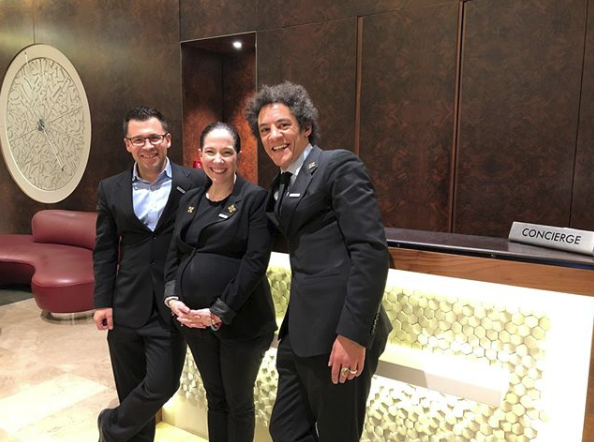
Taking a closer look at the reviews, we consistently had guests name-drop the staff when praising them – that’s a good sign that the service made an impact. Many of them cited our service as the differentiating factor when comparing with other hotels. One 300-word review spent 66% of the word-count praising one specific staff member.
So it’s settled: people associate COMO with good service. Now how do we convey good service on social media?
How do we say it?
Service isn’t exactly the easiest concept to convey through a photo and some copy. Anyone can say “we have great service”, but how do you convincingly sell that via social media?
And remember that at this point, our copy mostly came from ex-magazine journalists who were used to writing long-form 2000-word articles. Not quite as succinct as 140 characters and a few hashtags, and definitely not appealing to our newly defined target audience.
Furthermore, there was a legacy issue where the stakeholders did not want to feature staff for fear that the content would become outdated due to turnover. This policy probably dated back to when “content” meant physical printed stuff, and certainly wasn’t relevant in social media where content can last as little as 24 hours.

So I pushed hard to post photos of our staff, citing the engagement levels of images on Instagram that have faces in them. I pushed for our brand values to be conveyed through short first-person anecdotes, citing the popularity of accounts like @humansofny and travel influencers.
We switched our content style from being informative to being emotive, and it paid off because these posts became very well-received. As expected, guests liked seeing the people that made their stays so pleasant and memorable.
Average engagement went up 33% after the change in content strategy.
Service on social media
There was one other thing we did to convey the service that our brand is so renowned for, and this one isn’t exactly content related. We started pulling Community Management shifts, where we used a social listening tool to actively scan Instagram for activity about our hotels.
If you’re at our resort and you post about us, we’re likely to respond and engage you with a little friendly banter. Even a little “thank you for sharing” evokes the attentiveness of our staff.
Guests will get that holistic feeling of service, and fans who have yet to visit us will get a glimpse of COMO’s service.
This isn’t an activity that scales particularly well, but good service is about individual care and attention so why should social media be any different?