Revamping the Carousell Blog
What is it?
Carousell’s values and stories were not being conveyed to enough people, so they wanted to start a new blog that can house everything from user stories to selling guides.
What I did
My very first task upon joining Carousell was to lead the project and launch the blog within 90 days. So I designed the site, crafted the content plan, assembled a team of contributing writers from around the company, and spent a lot of time writing and editing the posts.
Understanding the blog
Before embarking on the project, my first step was to firmly establish and agree on the key objectives of the blog. Is it a tactical blog to drive traffic to the website? Is it meant to create brand equity to nurture more advocates?
In the end, we decided on these objectives:
Inspire people to sell
Build awareness of Carousell’s functionality and new features
Then we set about defining the target audience of the blog, which mostly mirrored the core users of the app. Somewhere in a Venn diagram between the stories we wanted to tell and the content that our target audience wanted to read was a sweet spot that was probably a green or purple color.
Planning the blog
The very first thing I did after that was to quickly analyze the competitive landscape and finding out if they were running anything similar. If so, what were their weaknesses, and how would ours differentiate itself?
One key difference I noticed was that competitor content focused on items – this is now available, that’s on sale etc.
Carousell content will instead focus on people: the community that uses it, and the team that builds it. This is so readers can relate emotionally to the content of the blog, and by extension Carousell’s brand.
The content plan was mapped out to cover four distinct pillars:
The culture at Carousell
The user community
Discovering cool and meaningful items
Improving your Carousell listings
I then wrote a playbook to guide the types of posts that will appear in each of the pillars, along with sample posts.

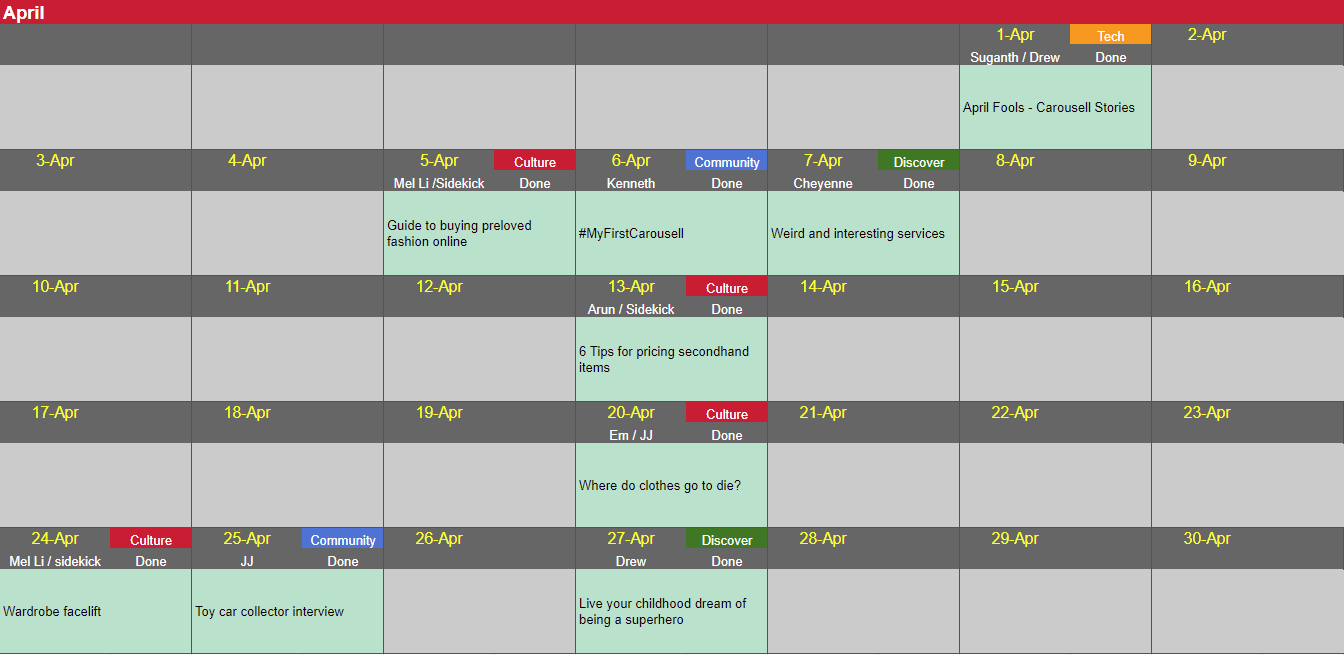
Lastly, I did some research on blog performance trends to determine what was an ideal post frequency to launch with, what was the optimal frequency at maturity, and whether our contributing editorial team was able to keep pace.
Designing the blog
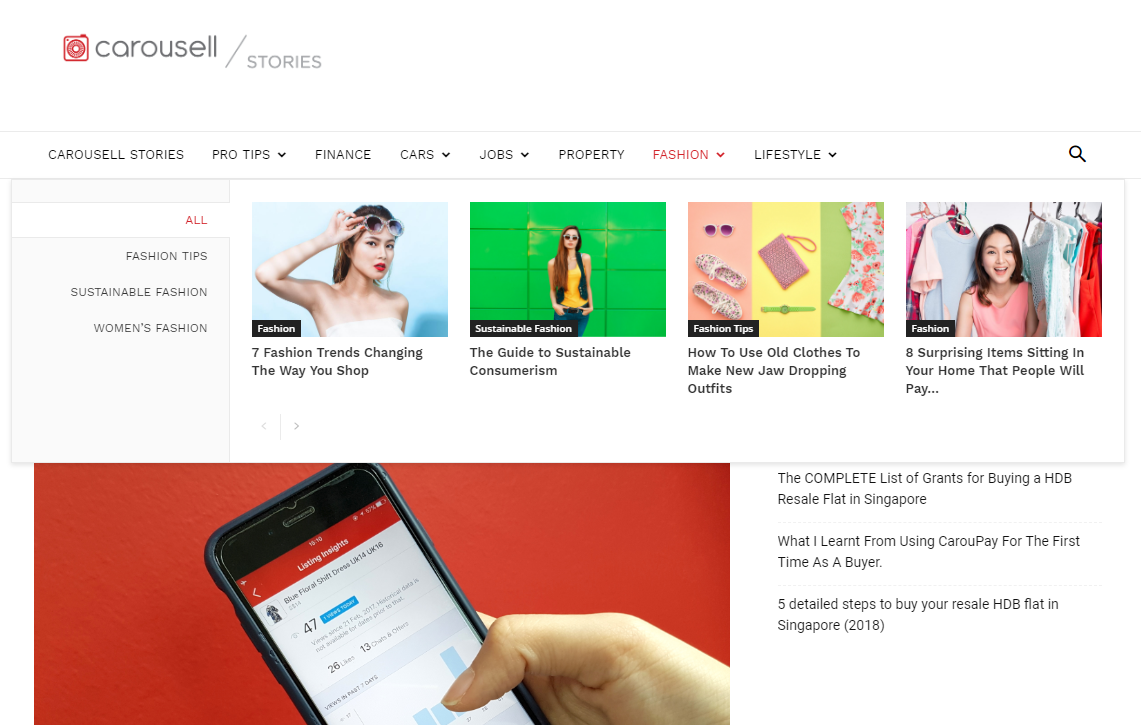
Getting the look and feel of the blog done was easy once we figured out what we wanted. Firstly, we knew we wanted it to have lots of pictures. We wanted the floating menu bar for easy navigation. And to keep readers in within the blog, we looked for themes that can push related articles.
Between some WordPress tinkering and our helpful Design lead creating the custom graphics and sharing the brand’s color codes, putting together a working blog didn’t take too long at all.
Writing the blog
With all the pieces in place, I started running editorial meetings with the contributing writers. The first meeting gave me sentimental flashbacks to my early career days as a magazine editor, but subsequently the nostalgia faded away and it was all about fighting deadlines and creative blocks again. Joy!
Launching and marketing the blog
I had painful memories of a blog I inherited at a previous company. It was poorly managed and marketed, and when I took control of it, it was already like the bastard child that lived under the stairs.
This was a shallow grave that I didn’t want the Carousell Blog to have, so we planned a property marketing strategy that infused the blog’s stories into the app, and consulted our resident SEO expert to ensure that the blog’s content stays relevant and brings in organic traffic. Without him, I can’t imagine we would’ve ever thought to write an article about making slime.
In the end, the blog launched on schedule and I passed my probation period at Carousell. Hurray!