5 Ways to use Choices in Visual Novels development
Gloom and Doom is the first visual novel I developed, and when I first started writing it, I used choices the only way I knew how: as a plot-branching tool like the choices in a Choose Your Own Adventure or Fighting Fantasy novel. But during the months spent developing and refining the game, I realized that there are many more ways that choices can be used to help your storytelling. I’d like to share these with you (using Gloom and Doom scenes as examples), in case you find them helpful.
Plot branching choices
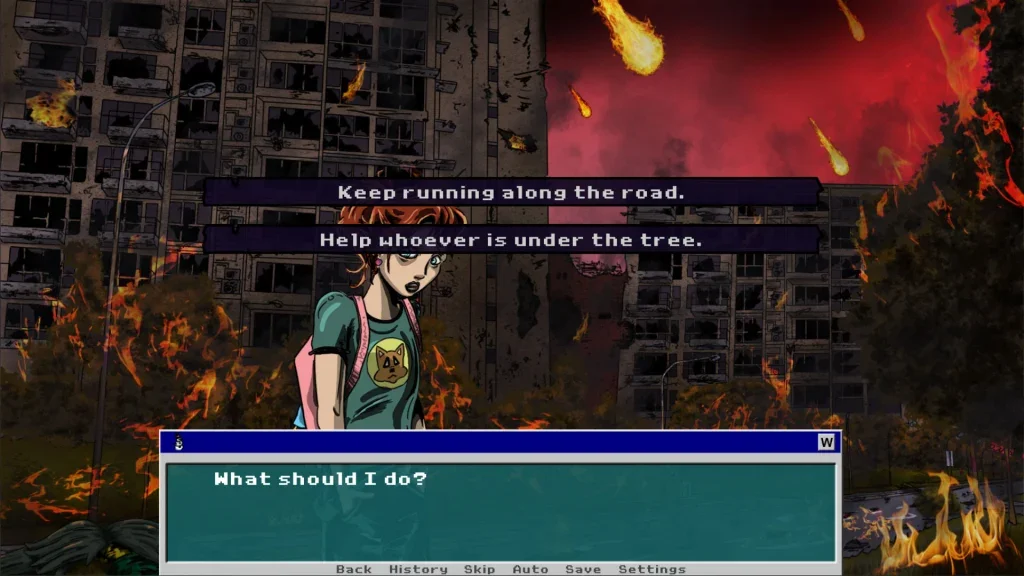
The most fundamental way to utilize a choice in a VN is as a plot-branching tool. Do you want to take the left door or the right door? This will appear to the player as the most important type of choice, as it will directly impact how their story plays out.
However, you can’t have too many of these, as it could result in an unrealistic amount of paths that require a shit-ton more writing to fulfill. Likewise, if you don’t have enough choices, you’re just going to end up becoming a kinetic novel and the player will feel like a passive voyeur in your game. Luckily, there are other types of choices you can include to increase that sense of player agency.
Trivial player agency choices
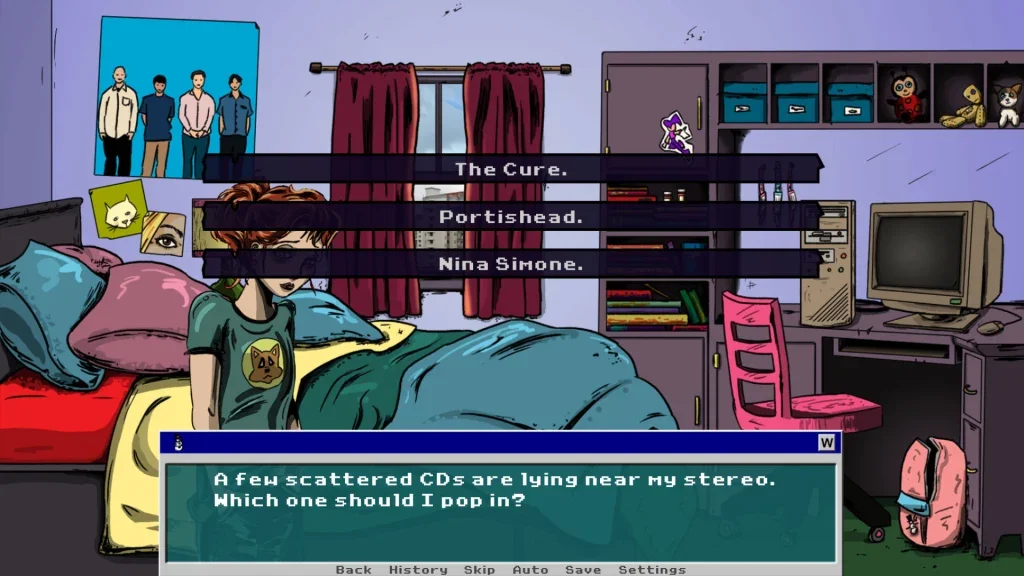
Trivial player agency choices are choices that don’t really make too much of a difference in the way the game plays out, but give the player a reinforced sense of control over the main character’s actions and an active participation in the story. The kind of choices here can be mostly cosmetic, and might only affect the next couple of lines in the game.
In this example, I gave the player the option to choose which CD Wynona would listen to. All this affects is the next line, where Wynona describes the music. So given that there are three choices here, I really only have to write three lines to support this choice. Nothing as epic as veering the story in three separate routes.
Other examples might be the way a player has to choose between “Hey” or “What’s up?” to greet another character, or deciding between the fish or the chicken dish.
The benefit of a choice like this is that the player can make a simple decision, knowing it probably won’t mean much in the long run. You can’t make a player make life-or-death choices all the time. The tension rises too high, and they get mentally exhausted.
Plus, if it is a trivial choice, like choosing music or food, it helps the player project their own preferences into the game, nurturing an emotional attachment to the main character. This emotional attachment can be further strengthened if the cosmetic choice is brought back later in the game.
In this example, while the player thinks that they’re only choosing the music in this scene, I designed a later scene to call back to this choice and have Wynona automatically listen to the genre of music chosen here. It’s a simple tool, but it helps.
Pro-tip: use trivial choices to help with pacing
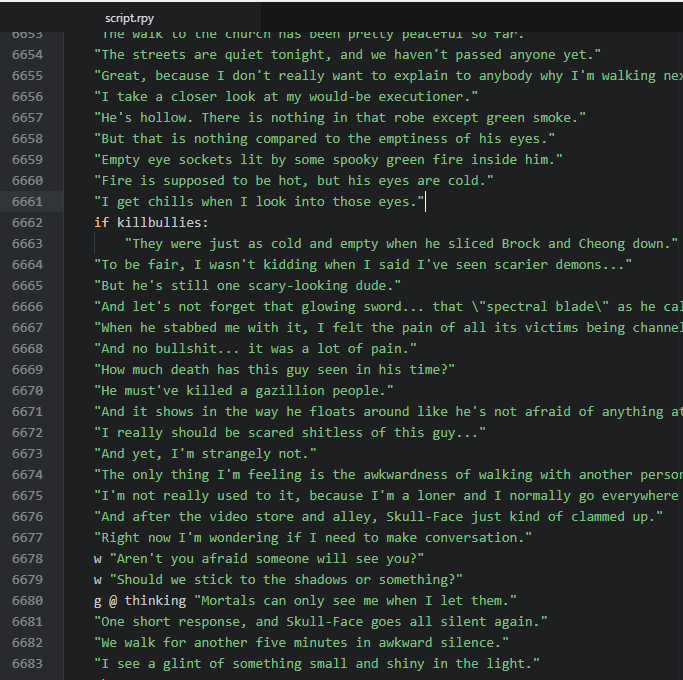
Because of their simple requirements, trivial choices are really useful to implement as a pacing tool. Let’s face it: no matter how amazing your story is, once you get into wall of text territory, it creates reading fatigue in your player, and their attention will start to waver.
Teachers have been using this trick for centuries. If you’re sitting through a lecture, notice how your teacher likes to drop questions like “Why do you think Dante kept lamenting that he wasn’t supposed to be here today?” after a lengthy speech.
If you look at your code and find that there have been 50 lines without a choice or a scene change, throw in a simple player-agency choice to break up the monotony and bring your player back into the game.
Reflectional choices
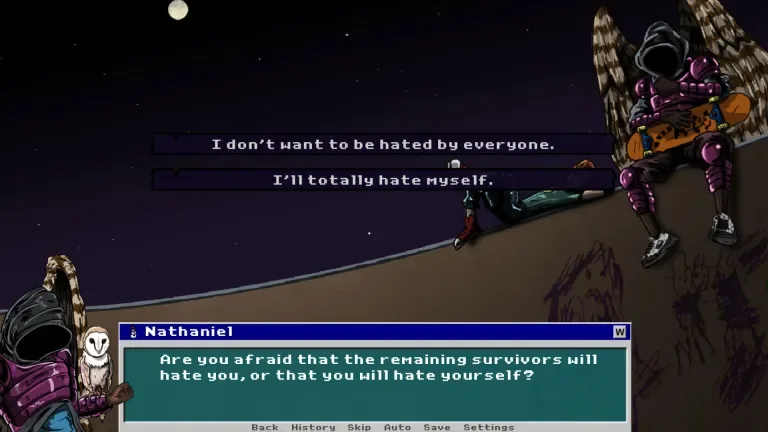
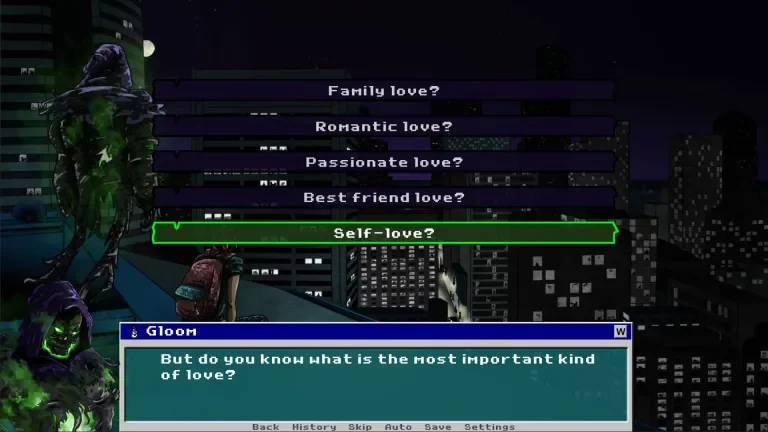
There are a few choices in Gloom and Doom that I added which are similar to the pacing choices above, but are specifically designed to create a pause in the narrative to give the player breathing room to reflect and contemplate.
Like the trivial choices, they don’t really deviate much from the core narrative, but their inclusion is to prompt the player to think about something deep. I use these to emphasize certain themes and ideas that I am exploring in my story.
For example, Nathaniel and Wynona are discussing how Wynona perceives herself and how her sense of duty has unhealthily eroded her self-worth. I added some choices to pause the dialogue and allow the player to apply this idea to themself. The choice menus in my game are not timed, so there is no pressure to make a selection, allowing the player the time needed to reflect on their own sense of self-perception.
Choices as storytelling
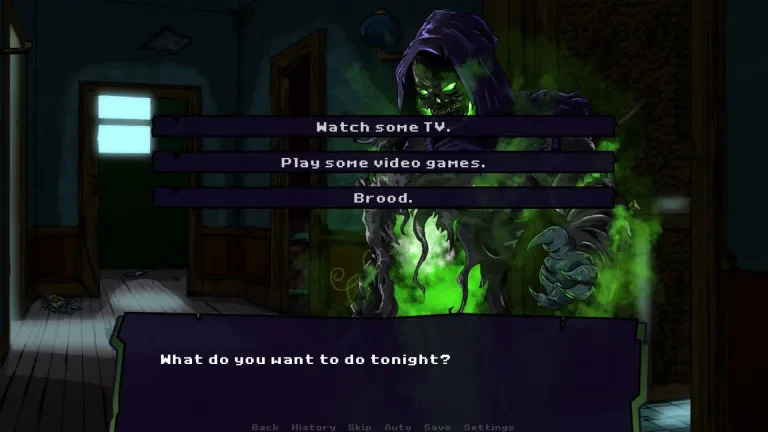
There are two instances in my game where the above menu of choices appears. A friend of mine asked why I did this, because it was repetitive and slowed down the pace of the story. Furthermore, the choices here don’t seem to change the story much.
But that was exactly why I did it. Gloom’s life at this point is slow and repetitive… he doesn’t feel like there is any progress, and he is helpless to change his situation despite the illusion of free will. I insisted on repeating this exact same set of choices to convey this feeling to the player, so they can feel the same hopelessness and restlessness he feels.
This is not the only way you can use choices to convey a feeling. If you want to convey tension and dread, you can always write a scene where the main character is confronted by their spouse with questions like these:
“Does this outfit make me look fat?”
“Do you remember what today is?”
“What caused you to break up with your ex?”
Joke choices
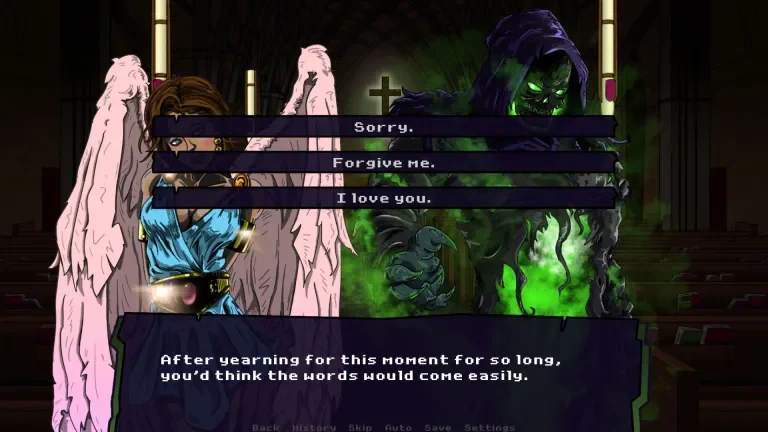
There are a few choices in my game that exist only for a joke. A running joke through Gloom and Doom is the sheer amount of references to 90s pop culture, and my proudest one is this one.
All three choices here represent the three verses of Baby Can I Hold You, a Tracy Chapman song that I adore. Individually, they don’t mean anything, but placed together and presented like this, it becomes a more pronounced reference to the song.
I’m sure you can come up with your own creative ways to use visual novel choice menus like this. It’s silly, but hey, it’s your game, and you can do whatever you want with it.
So there you have it! Five different ways to use choices in your visual novel. Again I have to stress that these are based on the one visual novel that I’ve written and I’m far from being an expert VN writer, but nevertheless I wanted to share these ideas in case anyone would find them helpful.
Good luck and happy writing! In the meantime, please check out Gloom and Doom and see how else I’ve played around with choices.